
Commercial Roof Repair vs. Replacement Guide
Table of Contents
How to Know If Your Commercial Roof Needs Repair or Replacement
You’ve got a roof leak, a stain on the ceiling, or a maintenance report flagging an issue on your building’s roof, and now you need to determine the right option for your building’s needs and your company’s budget. Patching a roof beyond saving wastes money and time, but replacing a roof that doesn’t need it wastes a lot more. At Bonitz of Georgia, we’re here to help you figure out which option is best for your commercial building roof.
A repair is usually enough if the damage is contained to one area, the roof deck underneath is still solid, and the roof is within its expected lifespan. A full replacement, on the other hand, is likely the better choice if the damage is spread across the roof, the roof deck has been compromised, or the roof has been patched many other times.
In general, five factors help determine whether a roof should be repaired or replaced: the roof’s age within its expected lifespan, how much of the total roof area is affected, the condition of the roof deck underneath, how many times the roof’s been repaired, and whether the insulation has taken on water.
Here’s how each factor affects the roof and your options:
- Age: Every roofing system has a working lifespan. A roof within its expected service life that is otherwise sound is usually a good repair candidate.
- How much of the roof is affected: Leaks or damage showing up across multiple sections of the roof is a sign the whole membrane is wearing out, not just in one spot. The larger the area affected, the more likely you need a roof replacement.
- Roof deck condition. The roof deck is the substrate of the system, or what everything else sits on. If the roof deck is still solid, a repair or overlay can work. If it’s soft, rotted, or holding water, a replacement is needed.
- Repair history. A roof that’s been patched multiple times is a sign that repairs may not be cutting it. The cost of constant patches can quickly approach the cost of just replacing the system.
- Insulation integrity. Once insulation is compromised, it can lead to water damage, heat leakage, and other roof system issues down the line. The state of the insulation and if it can be repaired is a major deciding factor.
What a Repair Can Actually Fix and What It Cannot
Repairs are the right call when the problem is localized, and the roof structure underneath is still good. That covers instances like:
- A failed seam or flashing detail
- Damage from a standalone event (a storm, fallen debris, environmental damage)
- An isolated leak with a clear point of entry
- General wear that hasn’t compromised the roof deck or insulation
Repairs are not the right choice when the roof damage is no longer isolated. For example, if the same multiple areas are failing in the same way, if the roofing membrane has reached the end of its lifespan, or if water has gotten into the roof deck or insulation, a patch is just a delay for the real solution.
When Repairs Become Replacements
While repairs can often be a simple project to complete, it’s not always just a patch. A crew can go up expecting to repair a leak and find that the roof deck underneath is compromised. At that point, a repair project will need to become a roof deck replacement, because there’s nothing solid left to repair onto.
The line between the two comes down to what’s underneath, not what’s on the surface. A coating or re-cover restores a roof that still has usable life left in the roof deck and insulation. A full replacement strips the roof down to the roof deck and starts over, and that’s the right call once the substrate is compromised or the roof has already been recoated as many times as the manufacturer allows.
Bonitz of Georgia determines which situation you’re in with a moisture survey, checking whether the existing substrate is dry and sound enough to build on top of. If it passes, a re-cover or recoat can go directly over the existing roof and skip the cost and disruption of a tear-off. If the roof deck or insulation has already taken on water, a recover isn’t a safe option, and that’s when it becomes a tear-off, regardless of how the roof looks from above.
What Our Assessment Looks Like, and How Fast We Can Get Out There
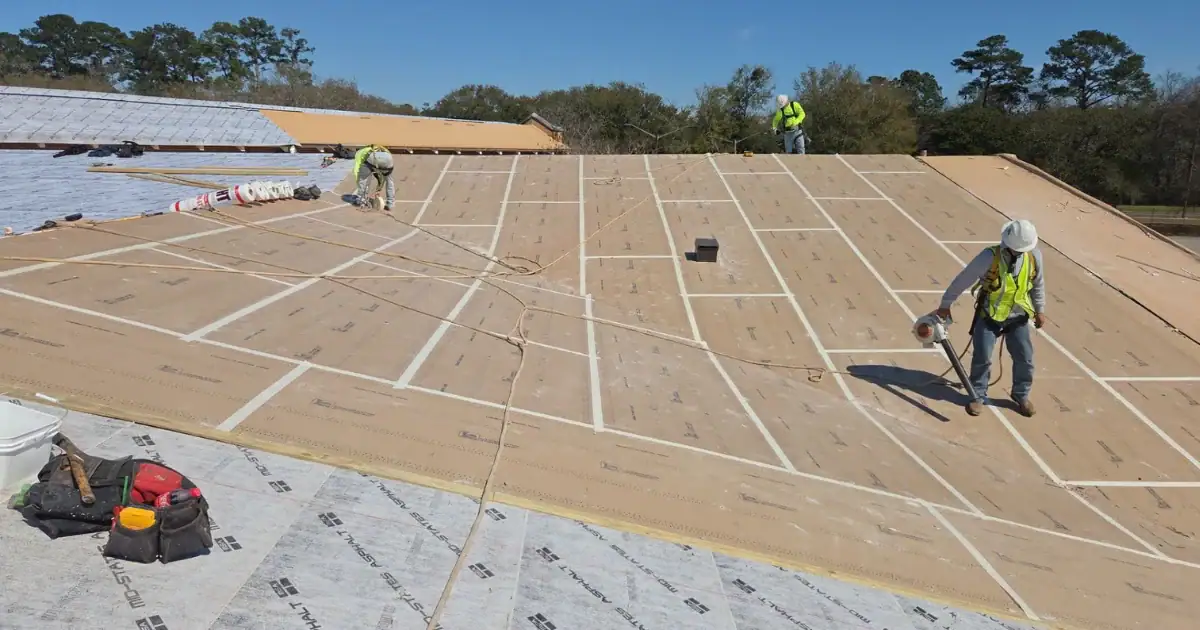
Guessing at a repair versus replacement from a photo or a phone description isn’t good enough for something this important. At Bonitz of Georgia, we make sure to thoroughly assess the whole system and check what’s underneath before we recommend anything. Here’s what that process looks like:
- Initial contact. We ask a few quick questions about the building, the roof type, and what issue you’re seeing (active leak, staining, age concerns, storm damage, etc.). We respond to inquiries within a day or two.
- Site visit scheduled. We work with your schedule to get an assessment crew onsite to determine the extent of the damage.
- Inspection and full check. Our crew assesses the full roof, not just the area you flagged, checking membrane condition, flashing, drainage, and any visible signs of wear. If there’s reason to suspect issues below the surface, we run a moisture survey to check whether the substrate is dry and sound, and probe or core-cut where needed to check roof deck condition directly.
- Documentation. We provide photos and notes on what we find and indicate specific locations on the roof, so you know exactly where the issues are.
- Findings and recommendations. We walk you through our findings, what they mean, and whether we recommend a repair, a partial replacement, or a full tear-off.
FAQs About Commercial Roof Repairs and Replacements
Still Not Sure?
Contact us to help you determine whether you need a roof repair or a full replacement.
Call us at 912-964-7155 or contact us online →
Contact Us
Contact us today for a free consultation.
"*" indicates required fields